
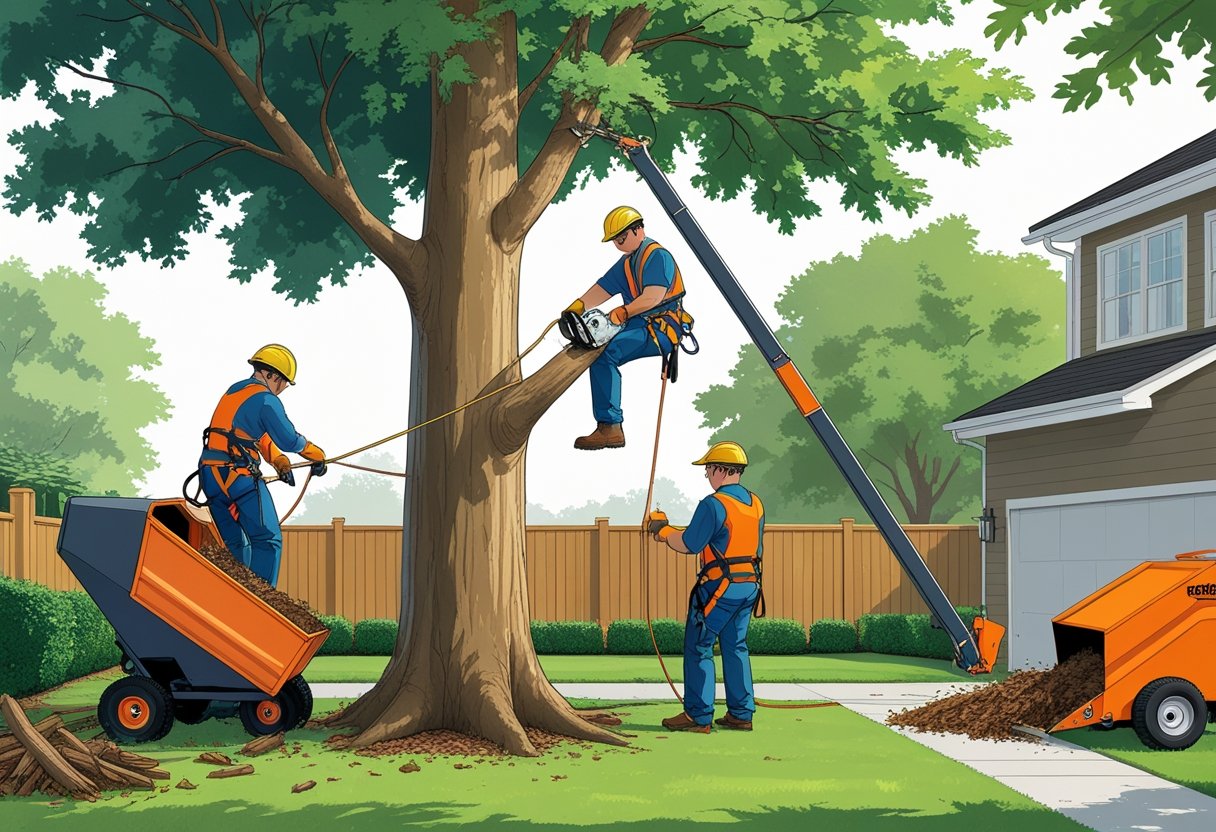
Removing a mature tree is a decision that cannot be reversed. It took decades to reach its size, it shades the property, supports wildlife and adds real value to the land none of which returns quickly once it is gone. At the same time, a compromised tree next to a house, a driveway or a boundary fence is a genuine hazard, and the consequences of ignoring one are severe. Knowing when tree cutting is genuinely necessary, rather than a tree simply needing attention, is what keeps that decision sound.
Structural Warning Signs
Certain physical indicators point to a tree that has already lost integrity. A significant lean that has developed recently, particularly with soil heaving or cracking on the opposite side of the root plate, suggests the anchorage is failing. Deep vertical cracks running along the trunk, cavities large enough to compromise the remaining wood, and bark falling away in sheets all indicate internal decay. Fungal fruiting bodies at the base or on major limbs are a strong signal that decay is well advanced inside the stem, since visible mushrooms usually mean the internal damage has been progressing for years.
Assessing the Canopy
The crown tells you about the tree’s health and its immediate risk. Extensive deadwood, especially large limbs held in the canopy rather than fallen, presents an obvious drop hazard over anything below. Thinning foliage, undersized leaves or dieback starting at the branch tips and working inward indicate the tree is struggling to move water and nutrients. Included bark at a major fork where two stems have grown together with bark trapped between them rather than fusing properly creates a weak union prone to splitting under load, and this is a common failure point during storms.
What Sits Beneath It Matters
Risk is a combination of likelihood and consequence, and the second half depends entirely on the target. A declining tree in an open field poses little threat. The same tree overhanging a bedroom, a car park, a walkway or a neighbour’s roof is an entirely different proposition. When weighing whether removal is justified, map what would be struck if a major limb or the whole stem failed. Proximity to power lines deserves particular caution and usually requires specialist handling regardless of the tree’s condition.
Roots, Foundations and Services
Below-ground conflicts develop slowly and are often noticed late. Roots lifting driveways and paths, cracking boundary walls or displacing drainage runs are visible symptoms. Damage to foundations is less common than homeowners fear but does occur with vigorous species on shrinkable soils. Root damage also cuts both ways: excavation for an extension, a new driveway or a service trench often severs a substantial share of a tree’s structural roots, leaving it stable in appearance but seriously compromised. A tree that has recently lost roots on one side deserves close assessment, and often benefits from crown reduction as part of routine tree pruning to rebalance the load.
Understand the Rules Before Anything Starts
Removal is not simply a matter of hiring equipment. There are legal protections covering trees in certain areas, on land above a defined size and within designated conservation zones, and carrying out unauthorised work can attract substantial penalties. Approval requirements differ depending on where the tree stands and what species it is. Anyone considering removal should confirm what permissions apply to their specific plot before work is scheduled, because the responsibility for compliance sits with the property owner rather than the contractor.
Alternatives Worth Considering First
A tree does not have to be all or nothing. Crown reduction lowers the sail area and leverage on a weak stem while keeping the tree alive. Selective removal of deadwood eliminates the immediate drop hazard. Cabling and bracing can support a weak fork where the tree is otherwise sound and worth retaining. Clearance pruning resolves conflicts with buildings and access routes. Work carried out steadily over the years often prevents the structural problems that lead to removal in the first place, which is why the trees in well-managed grounds rarely reach a critical state.
Getting a Professional Assessment
An arborist’s inspection provides evidence for whichever decision follows. It should cover species, dimensions, visible defects, the condition of the root plate, the targets within falling distance, and a stated risk rating with recommended actions and timescales. Where internal decay is suspected, resistograph or sonic tomography testing measures the sound wood remaining without felling the tree. A written report matters if a neighbour objects, if an insurer asks questions, or if approval is required verbal advice leaves you with nothing to point to.
After Storms and Site Works
Two events warrant an unscheduled check. Following heavy storms, inspect for fresh cracks, hanging limbs, lifted soil around the base and any change in lean. Damage sustained in one storm frequently causes failure in the next. Similarly, after construction or landscaping work near a tree, watch for canopy dieback over the following one to two seasons, which often signals root loss during excavation. Both situations can turn a previously healthy specimen into a hazard within a short period.
Building It Into Routine Care
The most reliable way to avoid emergency removals is consistent attention. Annual inspections catch developing defects early, when a modest intervention still works. Keeping tree maintenance on a regular schedule inspection, deadwood removal, formative pruning where appropriate means most trees stay safe and healthy without ever reaching the point where felling becomes the only option. That is both cheaper over time and far better for the property.