
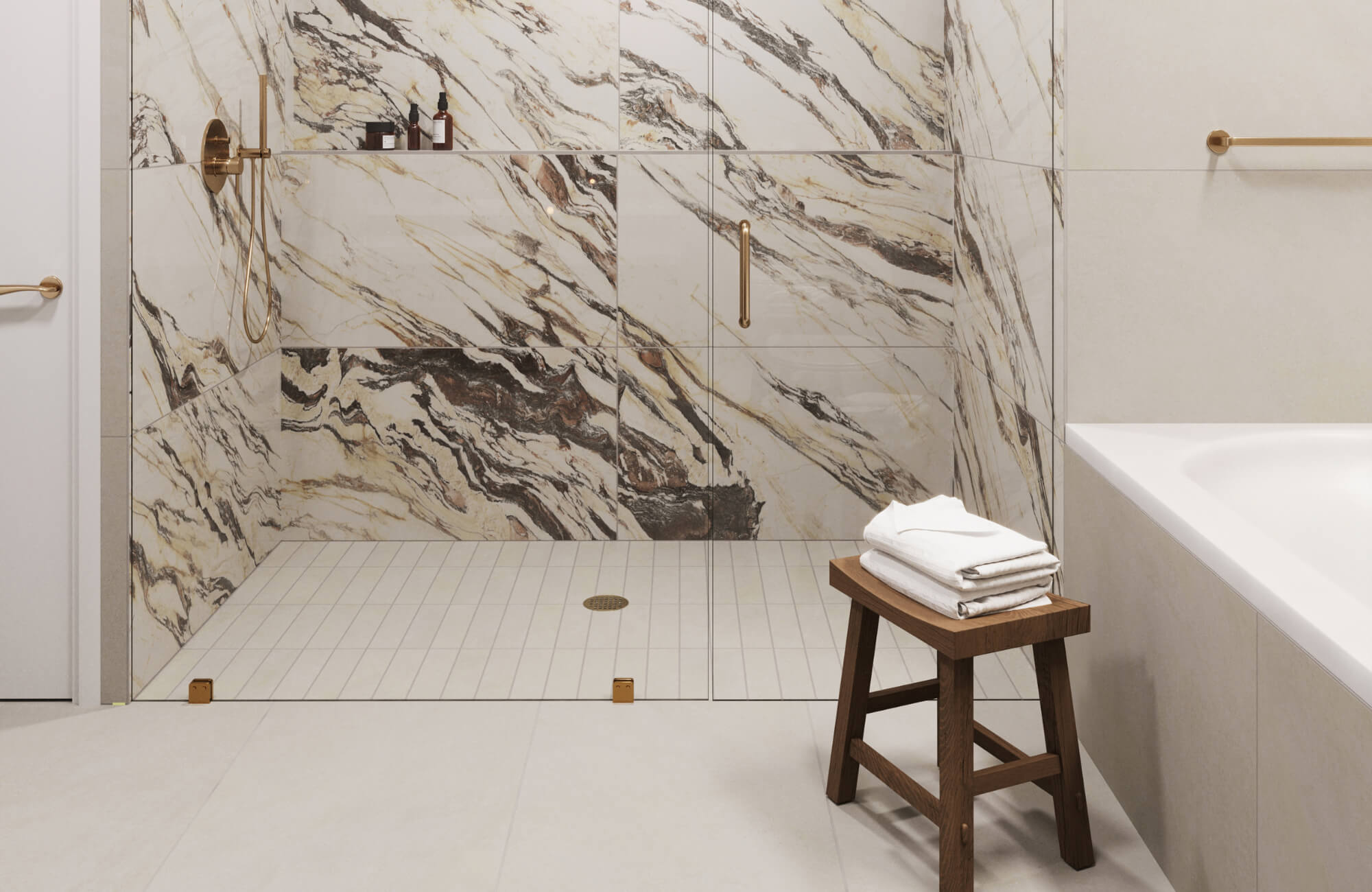
There is something unmistakable about natural stone. Even in a room filled with carefully selected furniture, lighting, and decorative details, marble tile has a way of attracting attention without demanding it. The surface may look calm from a distance, but up close, veins, subtle color transitions, and mineral patterns reveal that every piece is different.
That individuality is one of the main reasons marble continues to appear in both traditional and contemporary interiors. It can feel luxurious, minimalist, warm, dramatic, or understated depending on the stone, finish, tile size, and surrounding materials.
More importantly, marble does not need to dominate an entire room. Sometimes a relatively small area is enough to completely change its character.
What Makes Marble Tile Different From Other Materials?
Ceramic and porcelain manufacturers can create remarkably convincing marble-inspired patterns. They are practical choices for many projects. However, natural marble tile offers something fundamentally different: genuine variation.
Marble is formed naturally, so its veins and tonal differences are not repeated according to a manufactured pattern. One tile might contain a bold vein crossing the entire surface, while the next may have only delicate movement.
This creates depth across a finished installation.
For some homeowners, that variation requires a change in expectations. If the goal is absolute uniformity, natural marble may not be the ideal material. If the goal is an interior with personality, however, those differences become an advantage.
Instead of asking, “How can we make every tile look the same?” a better question is often, “How can we make these differences work together?”
Marble in the Bathroom
Bathrooms remain one of the most popular places to incorporate marble tile, and it is easy to understand why.
Light marble can visually open a smaller bathroom and pair beautifully with glass, chrome, brushed metal, wood, and neutral cabinetry. Larger tiles can produce a calmer appearance because there are fewer grout lines, while smaller formats and mosaics can add texture and detail.
A bathroom does not necessarily need marble everywhere.
For example, marble can be used on a shower wall while the remaining surfaces stay relatively simple. Another approach is to use marble flooring and repeat the same material in a smaller detail around a vanity or niche.
This creates visual continuity without overwhelming the room.
For wet environments, however, appearance should never be the only consideration. Tile finish, slip resistance, sealing, installation, and ongoing maintenance should all be evaluated for the specific application.
Creating a Kitchen With Personality
The kitchen presents a different design challenge. It is highly functional, often busy, and full of competing visual elements.
Cabinets, countertops, appliances, flooring, lighting, and hardware all need to work together. This is where a carefully selected marble tile backsplash can make a significant difference.
Imagine a kitchen with simple white cabinetry and understated countertops. A natural marble backsplash can introduce movement and texture without adding another strong color.
In darker kitchens, lighter marble can provide contrast. In warmer interiors, cream or beige stone can complement natural wood beautifully.
The key is balance.
If the marble contains strong, dramatic veining, surrounding surfaces can remain relatively restrained. When the marble pattern is subtle, there is more freedom to introduce texture and color elsewhere.
Marble Tile for Floors
Marble flooring can create an immediate sense of permanence.
Entryways, hallways, bathrooms, living spaces, and other carefully selected areas can benefit from natural stone flooring. Larger-format tiles often create a spacious, uninterrupted appearance, while smaller tiles can be used to develop more decorative layouts.
Before choosing marble for flooring, consider how the space is actually used.
Is it a quiet bathroom or a busy entrance? Will people regularly walk across it wearing outdoor shoes? Is moisture common? Could sand or grit be tracked inside?
These practical questions matter because marble is a natural material that can develop signs of use over time.
For some homeowners, this gradual patina adds character. Others want the stone to maintain a highly consistent appearance. Neither preference is wrong, but understanding how marble behaves makes it easier to choose appropriately.
Choosing Color and Veining
The phrase marble tile describes an enormous range of visual possibilities.
White marble remains a favorite because it can make interiors feel bright and sophisticated. Gray veining introduces movement without necessarily becoming visually dominant.
But marble is certainly not limited to white.
Cream, beige, gray, brown, black, and other distinctive tones can completely change the atmosphere of a space. Some marble varieties feature delicate patterns that are noticeable only at close range. Others contain dramatic veins that turn each tile into a decorative feature.
When browsing marble at Surfaces Galore, it helps to consider the complete room rather than looking at the stone in isolation.
Ask yourself:
• Will the marble be the main visual feature or a supporting material?
• Is the room naturally bright or relatively dark?
• Will it be paired with warm or cool colors?
• Are surrounding surfaces highly patterned or simple?
• Is a polished or honed appearance more appropriate?
These decisions can significantly influence the final result.
Large Tiles or Marble Mosaics?
Tile dimensions also affect how marble is perceived.
Large marble tile formats allow more of the natural veining to remain visible and can make a room feel cleaner and more expansive. They are particularly attractive where the stone itself should become the visual focus.
Smaller tiles and mosaics create a different effect.
Hexagons, geometric layouts, small squares, and other mosaic formats introduce additional detail. They can be especially effective on shower floors, backsplashes, niches, decorative borders, or small feature areas.
It is also possible to combine formats.
A bathroom might use larger marble tiles on the main walls and a matching mosaic in the shower area. The material remains consistent while the change in scale creates visual interest.
Caring for Natural Marble
Anyone considering marble should understand that natural stone requires appropriate care.
Acidic substances can affect marble, and harsh household cleaners may damage the surface. Using products designed for natural stone is generally the better approach. Spills should be addressed promptly, particularly when they involve strongly colored or acidic liquids.
Depending on the specific marble and application, sealing may also be recommended.
This extra attention should be considered part of owning a natural material rather than an unexpected inconvenience. Wood, leather, and natural stone all develop differently from synthetic surfaces. That authenticity is part of their appeal.
Why Marble Continues to Feel Relevant
Interior design trends move surprisingly fast. One year is dominated by cool minimalism, another by warm natural colors, bold patterns, or dramatic textures.
Yet marble tile continues to work across these changes.
Why?
Because marble is not simply a pattern or decorative trend. It is a natural material with its own character. It can complement contemporary furniture just as comfortably as traditional architecture.
A quiet white marble bathroom can feel modern. A richly veined marble fireplace can feel classical. A geometric marble mosaic can introduce an almost artistic element into a small space.
The result depends on how the material is used.
For homeowners, designers, and contractors, that versatility makes marble particularly interesting. Selecting the right stone is not simply about finding the most dramatic pattern. It is about finding the marble whose color, veining, finish, and format belong in the specific space being created.
When that combination is right, marble tile does more than cover a wall or floor. It gives the interior something manufactured uniformity cannot quite reproduce: natural character.