
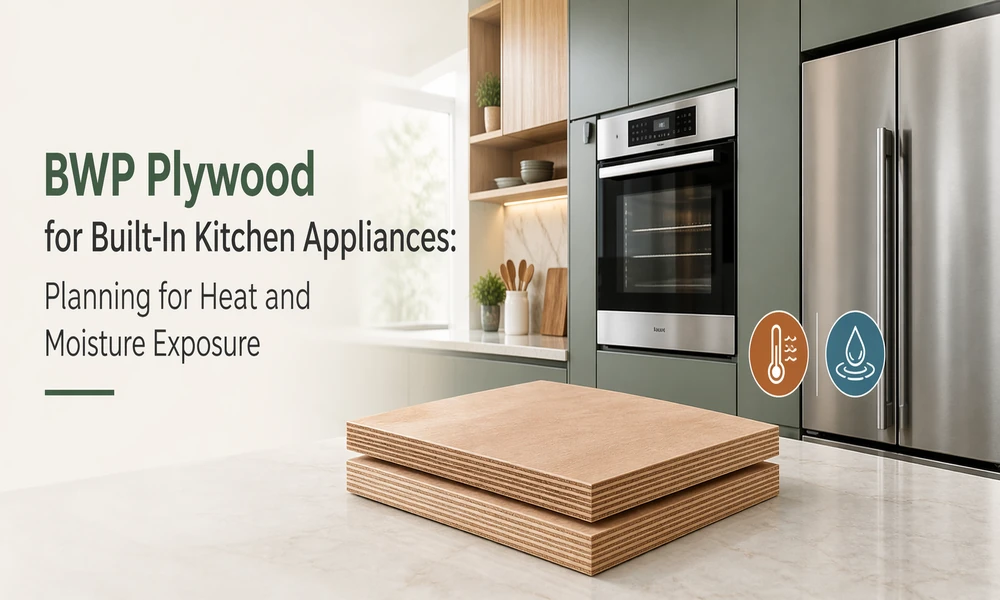
Built-in kitchen appliances require cabinets that will be built with incorporation of heat, moisture, and regular usage. Ovens, dishwashers, microwaves, and fridges create different conditions around the furniture. The choice of correct plywood and its suitable installation can help to retain the stability of the cabinet and preserve the interior of the kitchen.
Understanding BWP Plywood for Kitchen Cabinetry
BWP plywood, which stands for Boiling Water Proof plywood, has been built with adhesive that will withstand the humidity conditions better than the standard plywood used in interiors. Thus, it might be used as a material for cabinets in the kitchen because the moisture resistance is important.
Nevertheless, the moisture resistance alone does not suffice to declare the plywood suitable for installation of every appliance. The heat influences, the ventilation, and the clearance should also be taken into consideration. Therefore, the material for cabinets should be chosen based on the working conditions of the appliance and the position of the panel.
Planning for Heat Exposure Around Built-In Appliances
Ovens and microwaves produce considerable heat during operation. The cabinets around those appliances are to be designed in compliance with the installation specifications of the appliance production company, which includes clearances, openings for ventilation, and usage of any insulation materials.
Even BWP-grade plywood sheets, which underwent the process of moisture-proofing, cannot be automatically called fire-resistant or heat-resistant. High heat levels may still damage the plywood and its finish.In cases where heat shields or specific insulation are necessary for an appliance, it is imperative that these elements are part of the cabinet design instead of simply relying on plywood selection.
Managing Moisture Around Dishwashers and Sinks
Dishwashers, sinks, and water connections expose cabinets to water spills, condensation, and unintended leaks. When moisture is left in certain areas for long periods of time, it can lead to swelling and damage to the surface of the plywood material, particularly in areas of joints and edges of the material.
Boiling waterproof plywood might help if the right product is used in the project. However, it’s crucial to note that the finished cabinet cannot be classified as completely waterproof. To keep control of the issues of water penetration, the proper sealing of edges, suitable surface finishes, and secure plumbing installations should be considered.
Choosing Plywood for Different Kitchen Zones
Kitchen cabinets vary in their needs depending on their location. Cabinets around ovens should be made so as to have requirements for heat and ventilation, while units under sinks need to be protected from leaks and moisture.
When selecting waterproof plywood for demanding applications, it is important to take into account the expected exposure level, sizes of the panels, cabinet designs, and specifications of the products. It is necessary to select the right material corresponding to each particular location instead of assuming that one type of plywood can be used everywhere in the kitchen.
Checking Core Quality and Construction
Core construction directly affects the stability, fastening features, and quality of the finished cabinets. One should check the wooden sheets for gaps and uneven plywood layers before buying. The manufacturer should also check for warping and delamination and defects that could complicate further works.
As for the kitchen cabinets, not only correct dimensions play a major role but also that built-in appliances need to have the correctly sized openings and other tolerances. The manufacturer’s characteristics and quality documentation should prove to be enough to check whether it is the right material for the tasks.
Royale Touche plywood can be evaluated against their stated properties and documentation while designing kitchens. The customer needs to analyze if the product corresponds to their requirements instead of relying on such general characteristics as waterproof and premium.
Installation and Maintenance Considerations
Correct installation is very important for cabinets’ performance. It is essential that the edges cut are protected adequately and edges are fitted accurately. The ventilation holes need to be opened properly.
Regular inspections of sink units, dishwashers, and water connections need to be arranged for water leakage and other damages in cabinets caused by water.
Conclusion
BWP plywood can be considered for built-in kitchen cabinetry when its specifications suit the expected moisture exposure and construction requirements. However, it should not be treated as a substitute for heat protection, fire safety provisions or correct appliance installation.
By combining appropriate plywood selection with proper ventilation, edge protection and adherence to appliance installation guidelines, homeowners can plan functional and durable kitchen interiors that accommodate everyday use.