
Homeowners usually call a roofer for one reason: water is coming in. By then, the question is no longer whether work is needed but what kind, and the answer can range from replacing a few cracked tiles to stripping the entire roof back to its timbers. Good roof contractors start by diagnosing which situation you are in, because the services they offer differ widely in scope, cost and disruption. Knowing the main types of roofing work, and when each one makes sense, makes it much easier to judge a quote and avoid paying for more, or less, than the roof needs.
Why Roofs in Singapore Work Hard
A roof here deals with intense sun, high humidity and some of the heaviest rainfall of any major city, often arriving as short, violent thunderstorms. Ultraviolet light breaks down sealants and membranes, heat expands and contracts metal sheets and tile fixings, and sudden downpours test every joint and gutter at once. Moss and algae thrive in the damp, holding moisture against tiles. Over years, these stresses open small gaps that let water track into ceilings and walls, often far from where it first got in.
Inspection and Leak Diagnosis
The first service most roofers provide is an inspection. A thorough one covers the roof surface, ridges, valleys, flashings around chimneys and walls, gutters, downpipes and, where accessible, the underside of the roof inside the ceiling space. Water stains on a ceiling rarely sit directly below the leak, because water runs along timbers and membranes before dripping. Experienced contractors trace the path back to its source, sometimes using water testing, and report what they find with photographs before recommending any work.
Roof Repair
Repair work addresses specific defects without replacing the whole roof. Typical repairs include:
- Replacing cracked, slipped or broken tiles
- Resealing or replacing flashings around walls and penetrations
- Re-bedding and re-pointing ridge tiles
- Fixing loose or corroded metal sheets and fasteners
- Clearing and repairing gutters and downpipes
Repairs make sense when the roof is generally sound and problems are localised. They are the fastest and least expensive option, but repeated patching on an ageing roof can become a false economy.
Re-Roofing
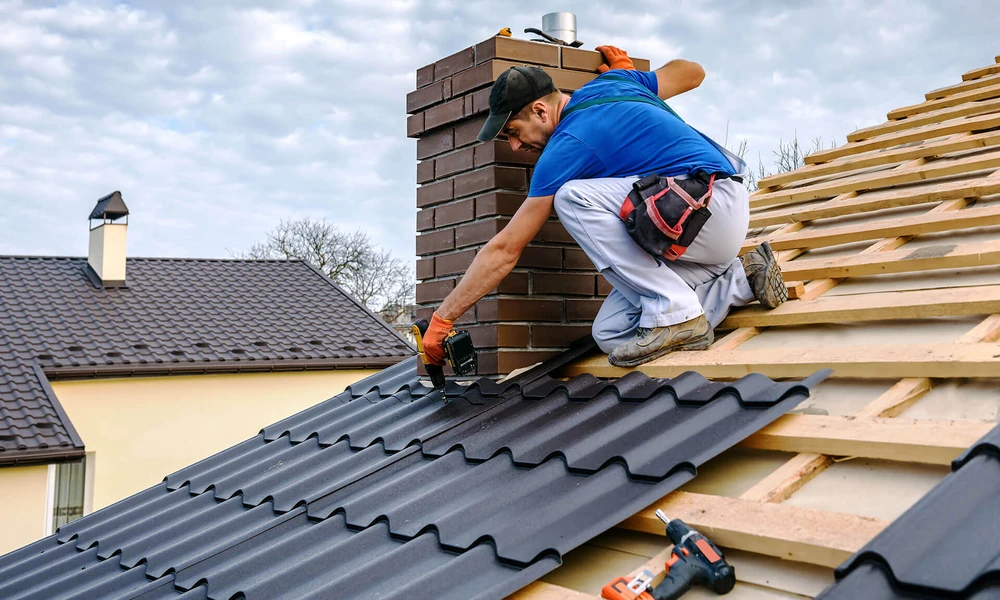
When tiles, underlay or sheeting have reached the end of their life, re-roofing replaces the roof covering, and often the underlay and battens beneath it. This is a larger project, usually involving scaffolding and several days or weeks of work, but it resets the roof’s lifespan. Re-roofing is often recommended when leaks are widespread, when many tiles are porous or brittle or when the underlay has degraded. Experienced roof contractors will explain whether the roof structure itself is sound enough to carry the new covering.
Waterproofing Flat Roofs
Flat and low-pitched roofs, common on terrace houses, extensions and commercial buildings, rely on waterproofing membranes rather than overlapping tiles. These include bituminous membranes, liquid-applied coatings and sheet systems. Waterproofing work may involve repairing blistered or cracked areas, applying a new coating over a sound base or removing and replacing the entire system. Drainage is critical, since standing water shortens membrane life, so outlets and falls should be checked as part of the job.
Metal Roofing Work
Metal roofs are widely used on industrial buildings, warehouses and some modern homes. They are durable and lightweight, but fixings can loosen, sealant washers can perish and cut edges can corrode, particularly near the coast. Services include replacing damaged sheets, renewing fasteners, treating rust, sealing laps and adding insulation beneath the sheets to reduce heat and rain noise. Older asbestos cement roofs require specialist handling and must be removed following the applicable regulations.
Gutters, Downpipes and Drainage
Many apparent roof leaks are actually drainage failures. Gutters blocked with leaves overflow in heavy rain, sending water back under tiles or down walls. Downpipes crack or separate at joints, and valleys collect debris. Regular cleaning and repair of these components is one of the most cost-effective roofing services available. Roofers can also resize gutters that cannot cope with Singapore’s intense downpours, which is a common problem on older properties.
Preventive Maintenance
Scheduled maintenance catches small issues before they become leaks. A maintenance visit might include:
- Inspecting tiles, sheets and flashings for damage
- Clearing gutters, valleys and outlets
- Removing moss, algae and debris
- Checking sealants and fixings
- Reporting any items that need repair
An annual check, plus a visit after severe storms, is a sensible routine for most homes and small commercial buildings.
Safety and Insurance
Roof work involves working at height, which is one of the most common causes of serious workplace accidents. In Singapore, work at height is covered by the Workplace Safety and Health regulations, which require proper planning, fall protection and trained workers. Before engaging anyone, ask how they will access the roof safely, whether they carry public liability insurance and whether their workers are covered for injury. Reputable contractors will answer without hesitation.
Choosing the Right Contractor
Ask for a written inspection report, a clear scope of work and an itemised quote. Compare warranties on both materials and workmanship, and ask for references from similar jobs. A firm offering a full range of roofing services should be able to explain why it recommends repair, re-roofing or waterproofing for your roof rather than another option.
Start With Evidence
Before agreeing to any work, ask to see photographs of the problem areas. A contractor who shows you the damage, rather than simply describing it, gives you a far better basis for deciding what to do.