
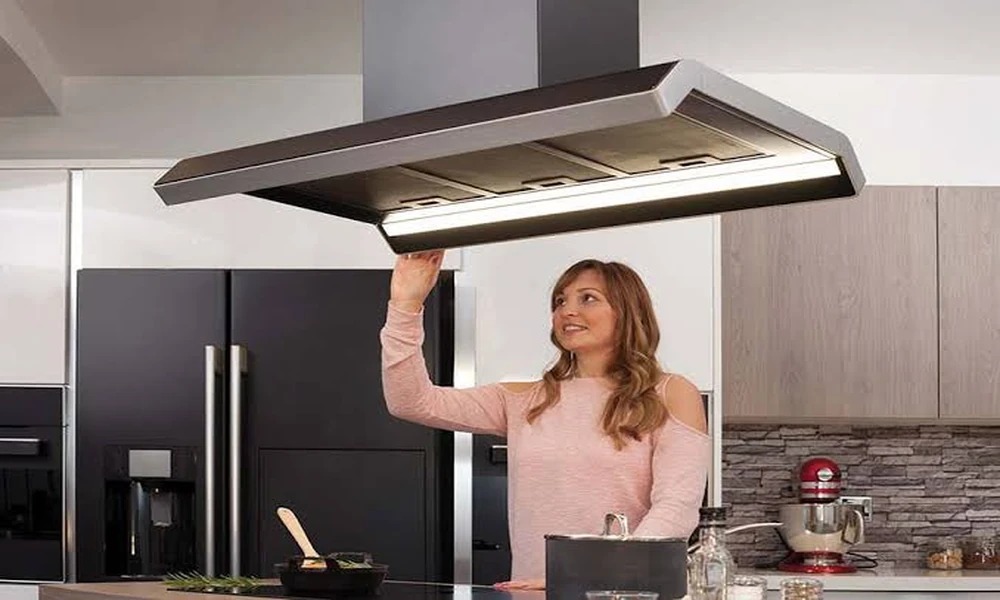
The decision to build a kitchen island with a hob brings immediate implications for extraction that must be planned at the design stage rather than addressed after the island is complete. The extraction options for island cooking – ceiling-suspended island hoods, extractor hobs with integrated downdraft, or perimeter extraction – each have different structural, aesthetic, and performance characteristics that determine which is appropriate for a specific kitchen. Understanding these options before finalising the island design prevents expensive revisions.
Ceiling-Suspended Island Hood
The traditional approach to island extraction is a ceiling-suspended hood positioned above the hob – typically requiring structural support from the ceiling and a duct route through the ceiling void. An [object Object] of this type should extend adequately beyond the hob footprint on all sides to capture vapours that would otherwise escape laterally, particularly during high-heat cooking. The visual impact of the suspended hood – which will be one of the most prominent design elements in the kitchen – makes aesthetics as important a consideration as extraction performance in most island installations.
Structural and Duct Planning
A ceiling-suspended island hood requires adequate structural support in the ceiling – a fixing point that can take the weight of the hood body plus the force of air movement through the extraction system. In new construction or extension, this can be incorporated into the structural design. In existing properties, identifying and accessing appropriate fixing points requires professional assessment. The duct route through the ceiling void and to an external exit point must be planned to minimise length and bends.
Downdraft Alternatives
For kitchen designs where a ceiling-suspended hood is structurally impractical or aesthetically undesirable, downdraft extraction – either as a separate unit or integrated into the hob as an extractor hob – offers an alternative. The structural requirements are different: floor-level ducting rather than ceiling routes, and a motor positioned within the island cabinetry. The aesthetic result is a completely hood-free cooking area, which suits certain design directions very well.
Temporary Solutions During Planning
Kitchen island projects often involve extended planning and construction periods. During renovation, maintaining kitchen function including extraction requires temporary solutions. The [object Object] and comparable portable extraction options provide ventilation during the renovation period without permanent installation requirements – allowing the household to cook and ventilate the space while the permanent island extraction solution is being properly planned and installed.
Order 1 (UK) | 15 Articles | ciarraappliances.com | 2 DoFollow Links Each | Ciarra Hood to Go